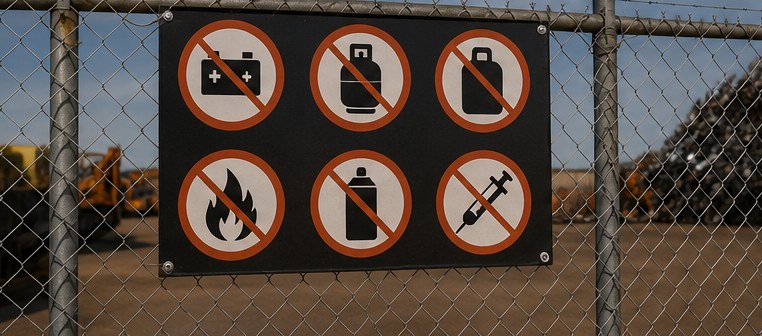
Every state with scrap metal regulation maintains a list of items dealers are prohibited from purchasing — regardless of seller explanation, documentation provided, or price offered. Buying a prohibited item exposes the dealer to criminal liability even if the item was legitimately obtained by the seller. "I didn't know" is not a defense in most states.
Universal Prohibited Items (Nearly All States)
The following items are prohibited from purchase in the vast majority of states with scrap metal dealer regulation. Consider these a universal baseline:
| Item | Why Prohibited | What to Watch For |
|---|---|---|
| Manhole covers and sewer grates | Public infrastructure theft; public safety hazard | Round cast iron covers, rectangular grates, utility access covers of any kind |
| Storm drain grates and catch basin frames | Public infrastructure; flooding risk when stolen | Iron grates typically weighing 50–150 lbs |
| Water meter covers and lids | Public utility infrastructure | Small round or rectangular iron covers marked with water utility symbols |
| Utility transmission wire (on spool or connected) | Electrical infrastructure theft; extreme theft risk | Wire still coiled on utility spools; wire clearly cut from active infrastructure |
| Guard rails and highway barrier cable | Traffic safety; public property | Corrugated steel rail sections; thick galvanized cable with highway hardware |
| Traffic signs and regulatory signs | Public safety; property of state/local government | Any metal sign with retroreflective sheeting; stop signs, speed limit signs, etc. |
| Railroad materials (track, spikes, plates) | Federal law (Railroad Safety Act); extreme theft risk | Steel rail sections; track hardware; signal wire; crossing equipment |
| Cemetery materials | Disturbing graves or burial property; state statutes | Bronze vases, plaques, memorial markers, flower holders |
| Beer kegs with brewer markings | Property of brewery; commercial lease violation | Any keg with a brewery name, logo, or trademark stamp |
| Fire hydrants (any component) | Public safety infrastructure | Brass caps, stems, bonnets, or complete hydrant bodies |
| Propane tanks (intact) | Safety hazard; may still contain gas | Never accept intact cylinders of any size for scrap |
State-Specific Additional Prohibitions
Texas
In addition to the universal list, Texas specifically prohibits purchasing: copper, aluminum, or bronze wire cut from active or inactive public utility service, rebar from active construction sites (must have a written contract with the general contractor), and bronze from historically designated properties or cemeteries. Texas also prohibits purchasing any material where a "reasonable person would know" the material was stolen — a subjective standard with significant enforcement teeth.
California
California has one of the most expansive prohibited item lists. The Business and Professions Code specifically prohibits purchasing: copper bus bars, plates, and wire from electrical substations; any material bearing a utility company's name or logo; agricultural equipment components (irrigation pipe, pump components) unless the seller can prove ownership of an agricultural operation; and catalytic converters without the full documentation package described in the California catalytic converter requirements.
Georgia
Georgia's prohibited list includes all universal items plus: copper from HVAC units (without documentation from a licensed HVAC contractor), bronze from government buildings or historic properties, and any item bearing the name or logo of a Georgia municipality, utility, or school system.
Florida
Florida prohibits all universal items plus: copper from air conditioning units unless the seller provides written documentation from a licensed contractor, any material that appears to have been removed from an active construction site without a written demolition or salvage contract, and aluminum wiring in any quantity unless from a licensed electrical contractor with documentation of the source.
Ohio
Ohio specifically prohibits the purchase of copper wire that still has pull string inside the conduit (indicating it was pulled directly from an electrical installation rather than recycled from manufactured products), and aluminum electrical wire from residential applications without proof of demolition or renovation permits.
How to Handle a Seller Offering Prohibited Items
- 1Decline the purchase clearly and immediately — "I can't buy that" is sufficient. You don't need to explain the law in detail or argue.
- 2Document the refusal in your transaction log — Note the date, time, brief description of the item offered, and that you declined to purchase. This creates a record if the item is later linked to a theft.
- 3If the seller is suspicious, contact law enforcement — If you believe the seller is actively attempting to sell stolen infrastructure metal, you may call non-emergency police. Many state laws specifically protect dealers who report suspected stolen materials from civil liability.
- 4Do not attempt to confiscate the item — You have no legal authority to take property from a seller. Simply decline and document.
FAQ
Prohibited item lists are set by state statute and may vary from those listed here. Verify current requirements with your state's licensing agency before making compliance decisions. This is not legal advice.