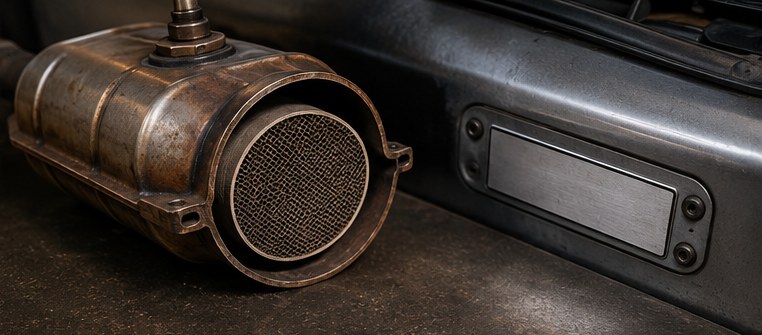
The surge in catalytic converter theft — driven by the high value of platinum, palladium, and rhodium — prompted a nationwide legislative response starting in 2021. Most states passed laws within 24 months, and many have already amended them once. The requirements are not uniform: what Texas requires differs substantially from California or Georgia. This guide covers the current requirements in every state that has enacted catalytic converter-specific scrap dealer regulations.
What Most State Laws Now Require
While requirements vary, most state catalytic converter laws enacted since 2021 share a common core of requirements. Understanding this baseline helps you identify where your state goes further.
| Requirement | How Common | Details |
|---|---|---|
| Seller's valid government-issued photo ID | ~42 states | Driver's license or state ID; must record name, address, and ID number |
| Vehicle VIN documentation | ~38 states | Seller must provide VIN of the vehicle the converter came from |
| Proof of vehicle ownership | ~32 states | Title, registration, or other documentation proving seller owns the vehicle |
| Payment delay (hold period) | ~28 states | Typically 24–72 hours; some require 7–10 days for converters specifically |
| No cash payment | ~24 states | Payment must be by check, money order, or electronic transfer (traceable) |
| Photograph of converter | ~20 states | Photo documentation of the specific converter purchased |
| Photo of seller | ~18 states | Photograph of the seller at time of transaction |
| Electronic reporting to law enforcement | ~15 states | Daily or real-time reporting to state database or LEADS/NCIC |
| Converter-specific serial number recording | ~12 states | Record any manufacturer serial or part number visible on converter |
State-by-State Requirements
Texas
Texas regulates catalytic converter purchases under the Occupations Code Chapter 1956 (Metal Recycling Entity Act). Dealers must: record seller's government-issued ID (name, address, ID number), record the VIN of the vehicle the converter came from, obtain a signed statement from the seller that they own the vehicle, pay only by check or electronic transfer (no cash), and retain all records for 2 years. Texas also prohibits purchasing from sellers under age 18. The Texas Department of Motor Vehicles enforces these requirements.
California
California's Business and Professions Code Section 21608.5 (effective January 1, 2022, strengthened 2023) imposes some of the strictest requirements in the nation. Dealers must: require the seller to provide their vehicle's current registration, title, or a bill of sale showing they legally own the vehicle the converter came from; photograph the seller and the converter; record the seller's thumbprint; make payment only by check mailed to the seller's address (not given in person) or electronic transfer — never cash; and hold the converter for 3 days before processing. Businesses found in violation face fines of $1,000–$10,000 per violation and possible license revocation.
Georgia
Georgia's Official Code of Georgia Annotated § 10-1-352 requires: seller's government-issued photo ID, vehicle registration or title for the vehicle the converter came from, VIN of that vehicle, photograph of the converter, no cash payment (check or electronic transfer only), and a mandatory 3-business-day hold before payment. Georgia requires dealers to submit transaction records to the Georgia Interface for Law Enforcement (GILE) system. Non-compliant dealers face $1,000–$25,000 fines per transaction and license revocation.
Florida
Florida's Section 538.25, Florida Statutes covers catalytic converter purchases specifically. Requirements: seller photo ID, VIN of source vehicle, proof of ownership (title or registration), photograph of seller and converter, 10-day hold period before processing or resale (one of the longest in the nation), and payment only by check. Florida also requires dealers to electronically report each catalytic converter transaction to the Florida Department of Law Enforcement (FDLE) via an approved secondhand dealer reporting system. The 10-day hold is strictly enforced.
Ohio
Ohio's Revised Code Section 4737.09 requires: seller photo ID, VIN documentation, vehicle ownership proof, no cash payment, and a 3-day hold. Ohio additionally requires dealers to record the weight of each converter purchased. The Ohio Highway Patrol actively monitors compliance at scrap yards and conducts unannounced inspections.
North Carolina
North Carolina's General Statute § 66-420 requires: photo ID, VIN, vehicle registration or title, photograph of the converter and seller, payment by check only (mailed to seller's address — not handed in person), and a 3-day hold. NC also requires dealers to retain a copy of the seller's vehicle registration for each converter transaction. The NC Department of Agriculture and Consumer Services enforces registration and compliance.
Tennessee
Tennessee's Tennessee Code Annotated § 62-9-120 requires: seller ID, VIN documentation, ownership proof, no cash payment, and a 24-hour hold. Tennessee is notable for requiring dealers to post a notice at their purchase counter (in at least 18-point font) listing the documentation required for catalytic converter sales. Failure to post this notice is itself a violation.
Virginia
Virginia's Code of Virginia § 59.1-136.3 requires: seller photo ID, VIN of source vehicle, proof the seller owns the vehicle (title or current registration), photograph of the seller and converter, no cash payment, and a 5-business-day hold. Virginia requires electronic reporting to the VATIX (Virginia Automated Theft Information eXchange) system for each catalytic converter transaction.
Michigan
Michigan's Public Act 250 of 2022 amended the existing scrap metal dealer act to add catalytic converter requirements: photo ID, VIN, ownership proof, no cash (check or EFT only), and a 3-day hold. Michigan is one of the states that also requires a photograph of the seller's vehicle at the time of the transaction — not just the converter itself.
Illinois
Illinois's Catalytic Converter Anti-Theft Act (HB 1632, 2023) requires: seller ID, VIN documentation, vehicle title or registration, photograph of the converter, seller photo, no cash payment, and a 3-day hold. Illinois also prohibits dealers from purchasing converters from a vehicle that is not registered in Illinois or an adjacent state without additional documentation, targeting large-scale trafficking.
States Without Catalytic Converter-Specific Laws (as of 2025)
A small number of states had not yet enacted catalytic converter-specific scrap dealer requirements as of early 2025: Alaska, Hawaii, Maine, Montana, New Hampshire, North Dakota, South Dakota, Vermont, and Wyoming. Dealers in these states are still subject to general scrap metal dealer registration requirements and seller ID laws where they exist, and should monitor their state legislature for new legislation — several of these states have bills pending.
Federal Considerations
There is no current federal law specifically governing catalytic converter scrap transactions, though federal stolen property statutes (18 U.S.C. § 2315, the National Stolen Property Act) apply when stolen converters cross state lines. The PART Act (Preventing Auto Recycling Theft), introduced in Congress in 2023, would create federal catalytic converter marking requirements — but as of 2025 it had not been enacted into law. Watch for future federal developments that may add another compliance layer.
Frequently Asked Questions
Laws governing catalytic converter purchases change frequently and vary significantly by state. This guide reflects the author's best understanding of laws in effect as of early 2025. Verify current requirements with your state's licensing agency or a qualified attorney before making compliance decisions. This is not legal advice.